Wednesday, November 25, 2009

Honeymoon: The L'Arc New World Hotel

If I had to choose between really hot weather or really cold weather, I'd probably choose the former. The main reason being that it's nice to hang out in the street under the shade of a tree. Luckily for us though, Korea has four seasons, as every Korean will tell you.

Just like everywhere else outside the tropics.

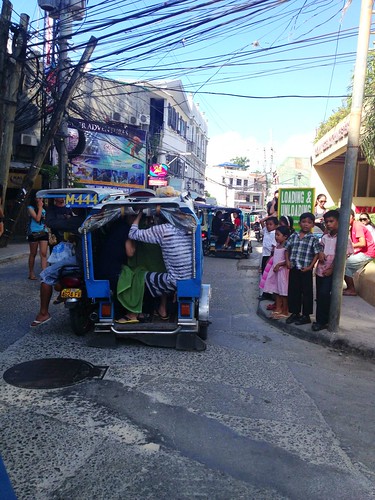
The weather in Macau is pretty warm all year round. There are a lot of gathering places like these, where the locals come to sit and talk to each other. It's funny how a location's weather can influence the demeanour of the people. Most Australians from Darwin that I've met are slow-moving and very relaxed, which I think is in part due to the humid weather all year.

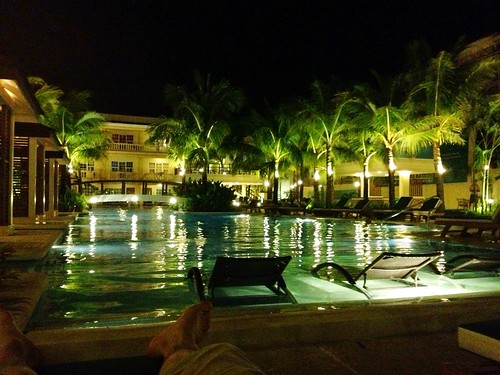
Luckily our hotel had a pool that was completely empty. Most of the patrons were busy gambling.

Then it was time to go back to the L'Arc Hotel, which you may remember was recently opened by Peter Ng from Adelaide. The L'Arc is probably a billion dollar venture, complete with hundreds of rooms and a large casino. Peter had told me he was opening a new place in Macau, but when we found it, we were a little awestruck. Those statues are complemented by giant bronze horses on the outdoor suite level.

In the lobby was this large floral arrangement. All the flowers in the hotel are alive, which I confirmed by curious inspection. There's a lot of money flowing around in Macau, and the L'Arc stands out as one of the more opulent hotels.

We had a free dinner at the L'Arc buffet restaurant. I never like to ask old colleagues for freebies, but I'll take a free dinner anytime. Especially when I have a hungry newly-wed nibbling my sleeve.

And of course the buffet had everything you would imagine at a place like that. The plump chef on the right made an excellent laksa. Better than mine, and I've made hundreds. Laksas are easy to make well, but hard to make perfect.

I have a feeling that they'd be really popular in Korea, if you marketed them to students.

Here's Heather, enjoying some desserts. Peter came and ate with us, but he was a busy man and had to leave quickly. He offered us a free stay at the L'Arc, but we politely declined.

I told him he has a nice hotel.

Then Ron took us around with his magic key and let us look in the presidential suite. Ron is our old friend from Busan and was working with Peter there as well. Now he's the director of rooms at the L'Arc, and always has interesting inside stories about hotels. He's also very good at pointing out minor blemishes on things like marble and carpet, which normal people can only see after staring long and hard.

The presidential suite at the L'Arc has multiple bathrooms, a separate kitchen and entrance for the butler, and flat screen TVs that can be summoned from motorized cabinets. As you can imagine, it costs an arm and a leg to stay here. The price wasn't finalized when we were there, but you're looking at around US$20,000.
Per night.

And look, it's me and Heather in there. If I taught English at CDI again for a year and didn't spend anything, I could pay for one night.

And here's our good friend Ron. He's a fun person to know in this part of the world.

Peter gave us a nice bottle of wine that night. If you're heading to Macau and you have money to spend, try heading for the L'Arc hotel. There's good hospitality there.

Then we went out to the MGM Grand. The L'Arc is the biggest hotel in Macau with around 2000 staff, but there are still places with bigger casinos, like the MGM Grand, Wynn's and The Venetian.

This is the back entrance to the MGM Grand. It's like they've created a fantasy Disneyland in most of these places. The reason they do this is for psychological purposes, it helps to get people spending more money. But don't let that stop you admiring the pretty lights.

It's pretty hard to remain unfazed by all of the extravagance in Macau, but Heather did a pretty good job. That's why she's the right one for me.

This is the reception desk. I guess they ran out of money and got kindergarten kids to put the finishing touches on the wallpaper.

Hey look, they even made a statue of my wife.

And if you arrive by car, this is what the valet reception looks like. More like a spaceport than a hotel. If you're tempted to gamble a lot in a nice place like this, just remember why they can afford to build at such epic proportions in the first place.

But I did 'accidentally' end up gambling a little. You only live once.

And this is what the Sands Casino looks like. Hundreds of tables, operating continuously throughout the year, with smoking patrons rolling dice and flipping cards. The free entertainment was nice, but they make terrible cocktails here.

And here's Heather observing the commotion below. She doesn't think much of table games, but took a liking to the slot machines. She likes the pictures that flash up, and her favourite one is called Geisha. My favourite machine is called Double Dolphins, because I like marine biology, and it's remotely educational. Well, not really.

Anyway, more of Macau coming soon...

Monday, November 23, 2009

Honeymoon: Food in Macau

One of Macau's most famous landmarks is the remaining facade of a cathedral known as the Ruins of St. Paul's. Originally Asia's largest cathedral, all that remains is the southern entrance, with the rest being destroyed by fire a couple of hundred years ago. The Macanese government set up a restoration effort in the 90's and now it's listed as a UNESCO World Heritage Site.

The structure has intricate carvings depicting different religious events. It emanates an impressive contrast, lavishly decorated due to the riches of the time, but now an entrance to nothing but empty sky.

Nearby is the newly built Museum de Macau. In general I'm interested in museums, but some are much better than others. For some reason I usually get pretty bored in craftsmanship or maritime museums.

Museum de Macau is pretty good.

The museum begins with the history of the Portugese settlers meeting the local Chinese inhabitants. The first explorers of the time often encountered kingdoms who, at that point, had only heard stories of other countries far away. It must have been like First Contact in Star Trek.

The photo above shows a model layout of an old fireworks factory. The Chinese invented gunpowder and Macau was once an exporter of fireworks to the West. In the middle of the compound is a lake with a hut built over it. This was where they used to store the more volatile chemicals. On the bottom right are the packing facilities, with concrete blast walls.

I think I would have chosen to be a fisherman in those times.

In the photo above is the world's scariest coat hanger. The irony here being that a lot of time and effort probably went into making this thing for a small child, only for that same child to be terrified of opening the wardrobe.

Here's Heather sitting in one of the openings on top of the museum complex, which was originally a smaller fort. The openings were for cannons to fire upon unruly neighbours.

Semi-tropical areas like Macau get a lot of sun, which stimulates the rapid growth of foliage. The museum grounds are typically Macanese, with a nice blend of faded stonework and greenery.

You don't see too many stone benches around the place these days. Which is a shame really, because they tend to last a few hundred years and never need to be painted. Perhaps when I retire, I shall become a stonemason.

And perhaps not, also.

We left the museum grounds and went for a winding walk to try and find the main road. A noticeable difference between the apartments in suburban Hong Kong and those in Macau are that the Macanese ones have cages around them. Good for security, but can be a problem if there's a fire.

And here's an interesting mix of Portugese and Chinese in a name: Edificio Kam Lin.

It seems that the pleasure to be derived from spending hours finding a miniscule stripey man in a crowd knows no borders.
When I was young, some other kids in the school library had already circled the location of Wally on all the pages, in a bright green highlighter. I remember being somewhat displeased at the accelerated reading experience.

After a fairly pleasant walk, it was time to eat. When travelling, Heather and I usually try to find small restaurants that are popular with the locals. A good trick is to buy something at a store, and then ask the shop attendant to recommend a good local place to eat.

For entree' we had a fish curry sandwich. Three of my favourite foods, all in one.

And in the photo above is ostrich meat. More interesting than the fact that they sell ostrich meat, is that they garnish it with Pringles on the side. Quite common in Macau.

I'd never eaten ostrich before, but I've heard it's popular in some places. It doesn't taste like giant chicken, as one might expect. More like a mixture of pork and beef.

And we also had spaghetti in octopus ink. Octopus ink is slightly salty and tastes nothing like real ink, which you may have had the misfortune to taste if you chewed your ballpoint pens in middle school. The flavour was pretty agreeable and had subtle seafood undertones. On the top was a battered fish fillet.
Probably Macau's most famous delicacy are these egg tarts. I had read about them in a tourist brochure and was eager to try them. Even though I don't like sweet things.

Well, they were alright.
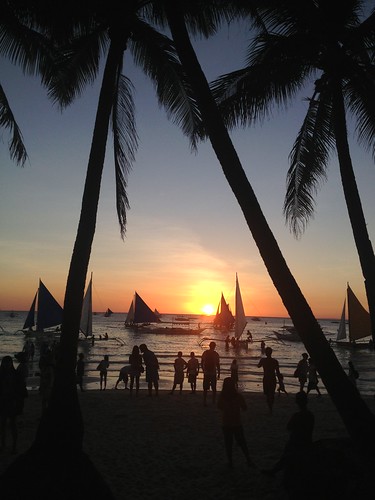
And I guess Macau's second most famous delicacy is meat jerky. I say meat jerky because it's made from all sorts of things from the animal kingdom. Best not to ask.
That guy you can see in the middle was one of a number of vendors giving out free samples. By walking from one end of the street to the other and trying every sample on offer, one could easily consume enough jerky to never want to come back.

And then we ended up back where we started, looking at the Ruins of St Paul's again. I like it when I find myself back where I started again, and it gives a nice rounded feeling to a blog post.

But to take us out this week is a pharmacy sign proclaiming a lack of fake products. Makes you really wonder about the pharmacy next door, that suspiciously has no such disclaimer evident.

Perhaps they just can't read English and spend the days wondering why all the customers go next door.

Well, that's all for me this time. See you soon!

Tuesday, November 17, 2009

Honeymoon: Macau's Monte Fort

While casinos are the major pulling force for the majority of tourists to Macau, the area does have a lot of other things to offer. Its unique history as a Chinese-Portugese outpost has shaped the landscape, with various forts and 16th century European architecture spread across the territory.

The Macau government imposes a 40% tax on all gambling revenue, and has used a good portion of the profits to boost infrastructure and preserve its cultural relics. The Monte Fort is a good example of this, sitting a little away from the city on a hill, with authentic stonework and well-kept gardens.

Intricate tree root lattices like these cover much of the old walls. I like how the smaller roots merge with each other over time and become one larger vessel. It's similar to what happens when you graft plants together.

Off in the distance, the conspicuous outline of the Casino Lisboa can be seen. It lights up brilliantly at night, and can even be seen from mainland China.

The grounds keeper was watering the flowers below with a hose. He was standing on the edge of the wall, with a good 20 metre drop below him.

The purpose of this lighthouse was to warn residents of incoming typhoons during monsoon season. A large portion of the population used to be fisherman and traders, and this lighthouse would flash different patterns according to what the weather would be like. For example, there was one pattern which meant 'incoming storm' and another that meant 'clear skies'.

The Monte fort was described as Macau's primary defensive structure in times of siege. Fortunately though, it never had to be used. These large cannons were able to hit targets out in the harbour.

A nice view of the lighthouse and sky. It's a pity that lighthouses don't have much of a role anymore. There's something mystical and romantic about them. For sailors lost out in the dark seas, they were beacons of humanity.

I like staring up at them while the clouds pass by, inducing a mild state of vertigo.

I told Heather to pose on these stairs. I imagined that the slightly rustic paintwork would make for a nice vintage photograph.

Back when I was an undergrad student, I started to get into the more detailed aspects of photography. But then I gave up when I realised that most of my photos were not very good, compared to the ones that people were posting on the photography forums.

Then Heather told me to pose for some photos. For some reason, I have never been very photogenic. See that smile that I'm doing? That's the one that says 'You don't need to count to three every time you take a photo....'

Here's some bamboo scaffolding that was supporting a radio antenna. Bamboo is reliably strong enough that construction workers have no qualms about climbing around on the top of structures like this. They remind me of the engineering projects we used to do in primary school, building things out of drinking straws and sticky tape to see how much weight they could support.

Running underneath the fort is a network of tunnels which were built as an air-raid shelter.

The views were nice but the day was an uncomfortable 37 degrees. I prefer monsoon season, but you do tend to get ridiculously wet in a matter of seconds.

Despite the heat, these little kids were playing in the sun without any problems. Heather and I stared at them for a while, wondering what their secret was. Maybe they had cold packs in their undies.

Luckily for us, there's a cable car service that takes you down the other side of the hill. But it wasn't air-conditioned, which was interesting. You wouldn't want to get stuck in the middle during a day like that.

People who come from Macau are called Macanese. The population is 95% Chinese, but because the official languages are both Cantonese and Portugese, most public signs include Portugese translations. Jo-anna informs me that Spanish and Portugese are two distinct languages.

I don't know any Portugese, but I can hazard a guess at what 'excrementos' means.

Macau has yellow taxis, whereas Hong Kong has red ones.

I appreciate trivial facts like these.

You can use Hong Kong dollars in Macau, or their local currency which is called Patacas. One Pataca is worth only slightly less than a Hong Kong dollar, and the locals here treat them as the same thing. There are 100 Avos in a Macanese Pataca.

I like the sound of 'Patacas'. Throughout our stay in Macau, I was often asking Heather how many Patacas she had left, just because I wanted to say the word Patacas.

This is the central business district of Macau. Besides tourism, there is a smaller fishing industry here, as well as a lot of financial services companies.

A lot of the streets of Macau have good mosaic tiling. The stones are all individually cut by council workers and the process is more labourious than concrete, but it's much easier on the eye.

I'd say I'm about half way through posting the pictures from our honeymoon now. It was only two weeks, but we kept ourselves busy. The next couple of posts are still from Macau, then it's off to Australia!

That's all for this post. More from Macau coming soon...


Sunday, November 15, 2009

Honeymoon: The Casinos of Macau

A couple of hundred years before the British colonised Hong Kong, the Portugese were already in Macau under a slightly more amicable agreement. Macau was once a major trading portal for South East Asia, but declined in that role and has since become more famous for its casinos.

The best way to get from Hong Kong to Macau is by ferry. There are a few different services, but they're all around the same price. The trip takes about an hour and if you have a Hong Kong tourist visa, it's very simple to go to Macau.

You don't need to reserve tickets beforehand, because there are ferries departing every 30 minutes. You just pay for the ticket (around US$50) and an hour later you can board with your luggage.

Macau does have an international airport, but it's only popular with the richer crowd. Departing by ferry also gives you some better sights of both harbours.

As soon as we got on the ferry, Heather spotted a packet of dried squid for sale behind a counter. But they wouldn't let us buy it until the ferry left the port, so Heather sat down and did a good job pretending that she was thinking about other things, beside the squid. But I know Heather pretty well. Some people get dollar signs in their eyes when they think of money, but Heather gets little squid silhouettes when she wants to eat dried squid.

As soon as the ferry left port, she had the squid in her hands and was munching gleefully. Late at night, squid parents tell their squid children about the Heather Monster.

The first thing I noticed about Macau was the blueness of the twilight sky. I was so used to the grey skies of Seoul that I had forgotten about its usual pleasant tones.

Hotels and casinos are big business in Macau and shuttle buses constantly arrive at the ferry terminal to transport new guests to their destinations. At the bus station you can roughly gauge how popular your hotel is, just by seeing how frequently the shuttle buses arrive. For the Venetian Hotel, buses come every couple of minutes. We had to wait around 45 minutes for ours.

We stayed at the Casa Real Hotel, which was pretty good in the end. A nice room with breakfast will put you back around US$130 per night.

I usually don't like to spend a lot on hotels, because we're normally out for most of the day anyway. But I spent a little more on the honeymoon just because.

As soon as we dropped off our luggage, we went out to have a look around. Macau itself is smaller than Hong Kong, and it similarly has both a peninsula and an island.

The first thing you notice about the city is an abundance of neon that one may previously have believed could only be found in Seoul.

What do we think of Macau? Small and dazzling.

Macau has historically been a gambling destination, as the Portugese government introduced relaxed gaming laws centuries ago. There are about 11 major casinos in the city and probably around 40 other smaller ones.

This hotel is called the L'Arc New World. It opened on the week we arrived and is currently the tallest hotel in Macau.

Coincidentally, the general manager of the L'Arc is my old Casuarina boss from Adelaide, Peter Ng. If you look back through the archives of this blog to 2007, you can see his old hotel where I used to teach, which was at The Seacloud in Busan. If we had come on any other week except opening week, we probably would have stayed here.

This is the lobby of the hotel. We'll come back here in a later blog post.

All the big name hotels from Las Vegas are now in Macau, including the MGM Grand. In terms of gambling quantity and number of tables, Macau has already overtaken Vegas and continues to grow. I would attribute that to a more ingrained gambling culture in the Chinese tourists who make up the majority of visitors. Luck is a prominent part of Chinese culture, with all sorts of symbolic things considered lucky. And when you have enough people believing in luck, there's money to be made.

But one good thing about lots of people spending money is that the casinos have reinvested a small portion of that into free attractions. In the lobby of the MGM Grand is this display on the ceiling, representing the heavens. It's much larger than it looks in the photo.

Directly underneath it is the Earth. The whole display starts moving at 9pm every night and people crowd around to watch the show.

The ceiling opens up to reveal an enormous LED display, and from the ground emerges the Money Tree. On some nights, the tree comes out, and on other nights a large golden dragon comes out instead.

It rotates slowly in its dazzling glory and people throw coins at it for good luck.


Here's a slightly long video of part of the show. Love them or hate them, the casinos of Macau know how to impress people with a good show.

More of that coming later. See you soon!